7 Bird Photography Tips for Ecuador's Cloud Forest
Cloud forest bird photography is uniquely challenging. The dense canopy filters most sunlight, rain can arrive without warning, and many target species are active only in the dim pre-dawn hours. Here are seven field-tested tips from our 30+ years of photographing birds in the Chocó Andino.
1. Embrace High ISO
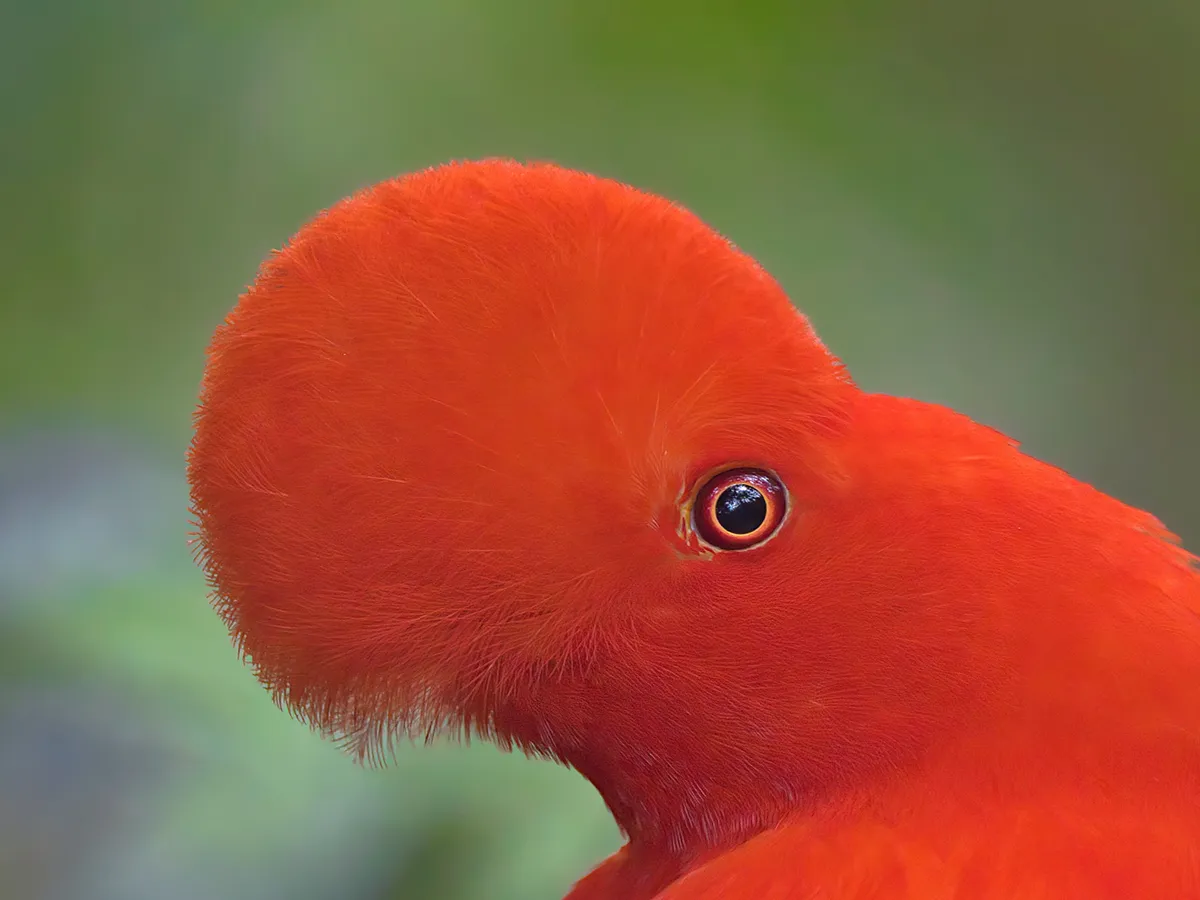
Forget the "never go above ISO 800" rule. In cloud forest, ISO 3200–6400 is standard. Modern cameras handle noise well at these levels, and a sharp image at ISO 6400 is infinitely better than a blurred image at ISO 400. For the Cock-of-the-rock lek at dawn, ISO 8000–12800 is often necessary.
2. Shoot Wide Open
Use the widest aperture your lens allows (f/2.8–f/5.6). Depth of field is less important than shutter speed when birds are moving. The bokeh from a wide aperture actually improves forest backgrounds by smoothing out distracting branches.
3. Prioritize Shutter Speed
For perched birds, 1/250s minimum. For active species (hummingbirds at feeders, antpittas hopping), 1/500s or faster. Use Shutter Priority (Tv/S) mode and let the camera handle aperture and ISO. A multi-flash setup can freeze hummingbird wings at 1/10000s — we use this technique on our photography tours.
4. Use Back-Button Focus
Separate focus from the shutter button. This gives you instant control over when the camera focuses vs. when it shoots. Essential for birds that perch briefly and move — you can pre-focus on a perch and fire when the bird lands without re-focusing.
5. Protect Your Gear
Cloud forest means moisture. Carry a rain cover for your camera, keep silica gel packets in your bag, and avoid changing lenses in humid conditions. A lens cloth is more important than a tripod in cloud forest.
6. Know the Light Windows
The best light in cloud forest comes in brief windows: 6:00–7:30 AM when the sun is low and mist creates diffused light, and 3:30–5:00 PM for golden backlight. Midday light rarely penetrates the canopy effectively. Plan your most important species for these windows.
7. Let Digiscoping Do the Heavy Lifting
You don't need a $5,000 lens to get great bird photos in Mindo. Our digiscoping setup produces publication-quality images through a spotting scope and your smartphone. On our photography tours, we combine your camera work with our digiscoping — you get the best of both worlds.